Submersible Pumps for Deep Water in Centennial
Deep water changes the estimate: compare the amount to lift, pump placement, discharge path, and shallow-water limits.
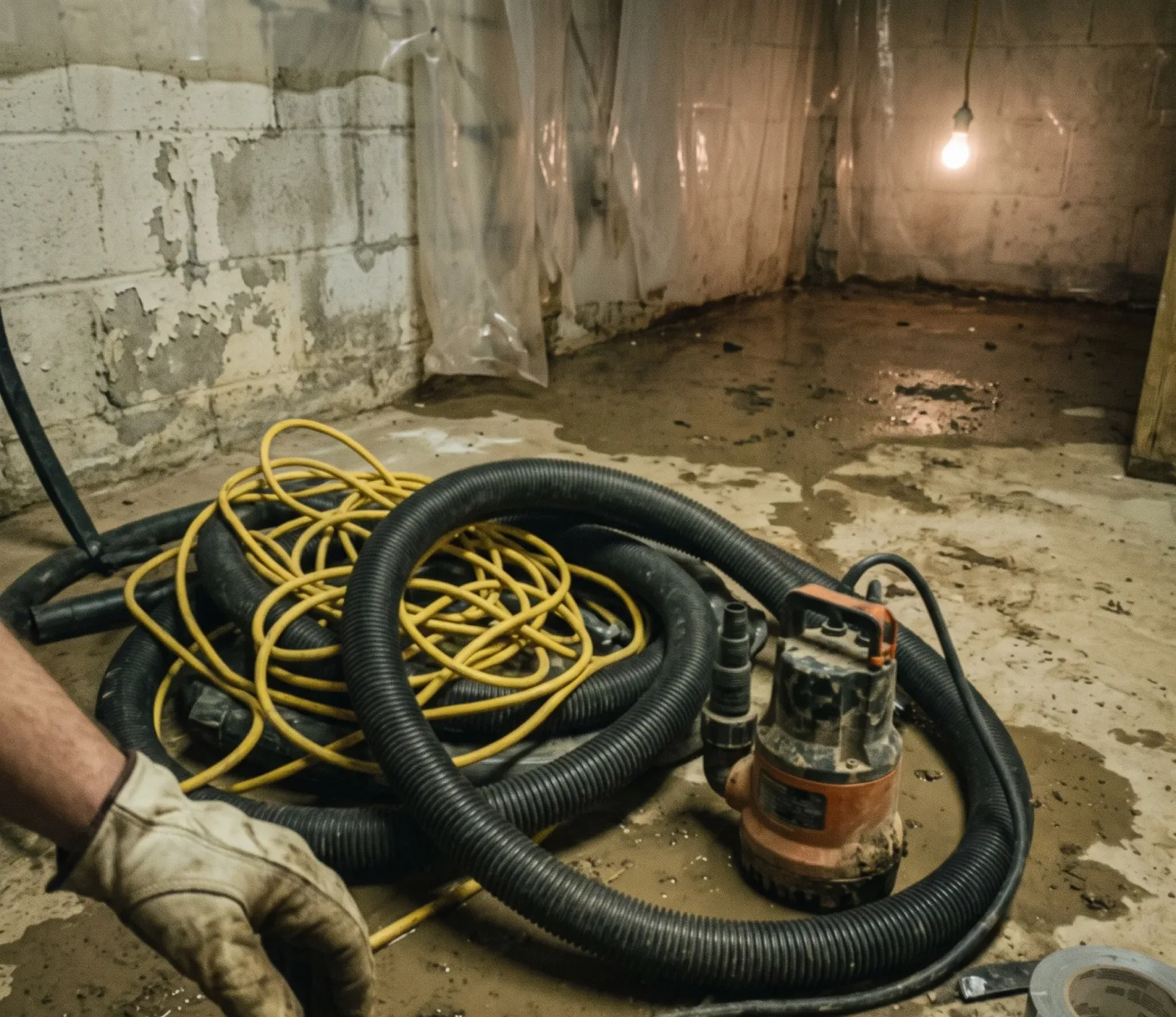
Crews use submersible pumps when water is deep enough to cover the intake and the volume calls for sustained pumping. They place the pump in the water and route a hose to a suitable discharge point. Shallow water or debris may require another extraction method.
How the Pump Sits in Water
The cost of submersible pump water removal depends partly on how deep the water is and how much must be moved. Crews place the pump underwater, where its motor drives water through a discharge hose. For a deep pool in a Centennial basement, that setup can move a larger volume than a small wet vacuum can manage efficiently. The pump choice and work time also depend on access to the affected area, the water’s condition, and where the hose can safely send it.
Depth changes the practical choice. When water stands well above the floor, a submerged pump can keep moving a substantial volume as it operates. As the level falls, the pump may reach its minimum operating depth and leave a thinner layer behind. That remaining water can call for another extraction method. When comparing estimates in Centennial, ask what equipment is expected to handle each stage and whether the stated scope includes the final shallow layer.
Volume matters alongside depth. A deep but small enclosed area may take less pumping than a broad basement with water across several rooms. The pros we connect you with can use the affected area and observed water level to explain the proposed pump capacity and expected work. If an estimate describes only a pump without saying where it will sit or which areas it covers, ask for those details in writing before comparing the scope.
Depth, Volume, and Estimate Scope
Placement affects both access and the amount left behind. A pump needs a stable spot in the water, with enough clearance for its intake and room to route the hose. Boxes, furniture, or a narrow stairwell can limit where equipment fits and how easily it can be monitored. For a Centennial property, compare estimates on those actual access conditions; a general equipment description cannot tell you whether the pump can reach the lowest part of your space.
Discharge routing can change the work involved. The hose needs a suitable destination that will not send water back toward the building or create another problem on the property. Ask the provider to describe the planned route and identify any limits before work starts. A property near Highlands Ranch Library and one elsewhere in Centennial may have different site layouts; the estimate should reflect the actual exit route, not assume the same setup everywhere.
Water with grit, leaves, or other debris can obstruct an intake or wear equipment, so a submersible pump is not automatically the right choice for every pool. The visible material in the water helps determine whether it can be pumped as planned or needs another handling method. Have the estimate state any debris-related limits and explain whether extra clearing or a different tool is included. That makes the equipment allowance easier to compare with the work described.
Planning the Discharge Route
The pump removes pooled water, but its stopping point is not proof that floors and walls are dry. Once the visible level is down, moisture can remain in building materials and need separate assessment or drying equipment. Keep that distinction clear when reviewing a Centennial estimate: the pump and extraction scope cover water removal, while moisture checks and drying may be listed as additional work. Written scope details help you see what the proposed amount covers.
Safety affects whether equipment can be placed and run. Water around outlets, appliances, or wiring may be electrically hazardous, and a pump itself needs a safe power arrangement. Do not enter affected water if electrical conditions are uncertain; seek qualified guidance. Ask the provider how the pump will be powered and what access must remain clear. A careful estimate should account for site conditions without promising that a particular setup is safe before it is assessed.
Limits in Shallow or Debris-Filled Water
Compare estimates by matching the same work: the measured area, expected water depth, pump placement, discharge route, and any follow-up method for water the pump cannot reach. For a Centennial home, notes from a site near Swedish Medical Center are useful only if they describe that property's conditions; location alone cannot establish the equipment needed. A written scope makes differences visible, and photos or moisture readings can help document removal and remaining concerns for an insurer.
If the water level keeps rising while pumping, the source may still be feeding the space. A submersible pump can move water out, but it does not stop a leaking line or another active entry point. Tell the provider what you have observed and ask whether source control is outside the extraction estimate. Keeping those scopes separate helps you understand why the pump may need to keep running and what work remains after the incoming water is addressed.
Details to Compare in Estimates
- Compare the stated water depth, affected area, and pump capacity; each helps explain the proposed extraction scope.
- Ask where the discharge hose will run and what destination the estimate assumes.
- Check whether shallow water, debris, moisture assessment, and drying appear as included or separate work.
- Check whether the pump can sit securely in the deepest area and whether its inlet can stay clear as the water level falls.
- Note water depth across the affected area and likely volume; a deep basement pool can call for different equipment than a thin layer.
- Compare written scopes for a Centennial property and addresses near the Colorado State Capitol or Rocky Mountain Arsenal by depth, volume, and discharge route.
Water Removal FAQs
How deep does water need to be for a submersible pump to make sense?
Crews generally consider a submersible pump when water is deep enough to cover its intake and the volume is too large for a wet vacuum to move efficiently. The pump sits in the water and sends it through a hose to a suitable discharge point. Depth, debris, access, and hose routing all affect whether it fits a Centennial property.
Where can the discharge hose route water from my Centennial property?
A pump can leave a shallow layer once the water drops below its operating depth. A wet vacuum or another suitable method may be needed to collect what remains, depending on the floor and debris. Ask whether that finishing step is included in the written scope, since the pump alone may not reach every last puddle.
Can a submersible pump handle shallow water or debris?
The discharge hose needs a destination that carries water away without directing it back toward the structure or creating a problem elsewhere on the property. Routing depends on the site's layout and available options. Have the provider describe the proposed path and any limits in the estimate so you can compare the work clearly.
Compare the Pump Scope
When comparing estimates, ask the pros we connect you with to document measured depth, likely volume, pump placement, and the discharge plan.
Call (303) 647-3932